Skip to content
Main logo Delft Design for Values
  • Values
    • Accountability
    • Autonomy
    • Democracy
    • Diversity & Inclusion
    • Empowerment
    • Explainability
    • Health
    • Justice / fairness / equality
    • Participation
    • Privacy
    • Responsibility
    • Safety
    • Security
    • Sustainability
    • Transparency / openness
    • Trust
    • Well-being / happiness
  • Application Areas
    • Aerospace
    • Agriculture
    • Architecture & the built environment
    • Artificial Intelligence
    • Biotechnology
    • Energy
    • Healthcare
    • ICT
    • Military
    • Nanotechnology
    • Quantum Technology
    • Robotics
    • Transport
    • Water
  • Fundamental Themes
    • Design Methods
    • Participatory Design
    • Prototyping
    • Stakeholder engagement
    • Technology Assessment
    • Value Assessment / Validation
    • Value Change
    • Value Conflicts
    • Value Identification / Elicitation
    • Value Operationalisation
  • Resources
    • Book ‘Teaching Design for Values’
    • Handbook of Ethics, Values and Technological Design
    • TU Delft Experts
    • TU Delft Publications
    • TU Delft Showcase
  • About Us
    • What is Design for Values
    • About the DDfV Institute
    • People & Organisation
  • What We Do
    • Annual Themes
    • DDfV Toolkit Project
    • DDfV Seed Projects
  • Updates & Events
    • News & Blogs
    • Events
  • Contact
    • Contact
    • Subscribe to the DDfV Newsletter
  • Values
    • Accountability
    • Autonomy
    • Democracy
    • Diversity & Inclusion
    • Empowerment
    • Explainability
    • Health
    • Justice / fairness / equality
    • Participation
    • Privacy
    • Responsibility
    • Safety
    • Security
    • Sustainability
    • Transparency / openness
    • Trust
    • Well-being / happiness
  • Application Areas
    • Aerospace
    • Agriculture
    • Architecture & the built environment
    • Artificial Intelligence
    • Biotechnology
    • Energy
    • Healthcare
    • ICT
    • Military
    • Nanotechnology
    • Quantum Technology
    • Robotics
    • Transport
    • Water
  • Fundamental Themes
    • Design Methods
    • Participatory Design
    • Prototyping
    • Stakeholder engagement
    • Technology Assessment
    • Value Assessment / Validation
    • Value Change
    • Value Conflicts
    • Value Identification / Elicitation
    • Value Operationalisation
  • Resources
    • Book ‘Teaching Design for Values’
    • Handbook of Ethics, Values and Technological Design
    • TU Delft Experts
    • TU Delft Publications
    • TU Delft Showcase
  • About Us
    • What is Design for Values
    • About the DDfV Institute
    • People & Organisation
  • What We Do
    • Annual Themes
    • DDfV Toolkit Project
    • DDfV Seed Projects
  • Updates & Events
    • News & Blogs
    • Events
  • Contact
    • Contact
    • Subscribe to the DDfV Newsletter
← Back to Seed Projects
August 24, 2025
Seed Project

PAS4ALL: Is the Preference-based Accommodation Strategy design and decision method suitable for other applicability domains?

PAS4ALL: Is the Preference-based Accommodation Strategy design and decision method suitable for other applicability domains?

PAS4ALL: Preference-based Accommodation Strategy for All Domains

PAS4ALL explores how the Preference-based Accommodation Strategy (PAS), a design and decision support approach originally developed for corporate real estate, can support value-driven decision-making across other fields.

The PAS method

How does an organisation align real estate decisions with the actual needs of the organisation? There are various methods for making well-founded decisions about a real estate portfolio. Some focus on shareholders and use financial value as the single measure. Others involve multiple stakeholders, from board members to end users, and deal with different types of values that are measured in different ways.

As Monique Arkesteijn puts it: in this field, it is not only about tangible things. The value of a building or a space is just as much about its atmosphere as it is about bricks and mortar. But in practice, one interest, such as cost or the need for square metres, tends to dominate the process and push other interests aside. On top of that, decision-making is often implicitly coloured by the priorities of a responsible manager or designer.

PAS was developed to address this. The method brings all types of values, including subjective ones, into the decision-making process on an equal footing, and lets stakeholders themselves design alternatives and determine the optimum.

How it works

The design and decision model is built from fifteen building blocks drawn from three disciplines: design, decision science, and management. It starts with a question or problem. For example: how can all catering facilities contribute to a lively university campus?

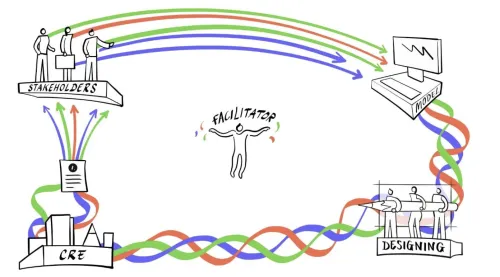
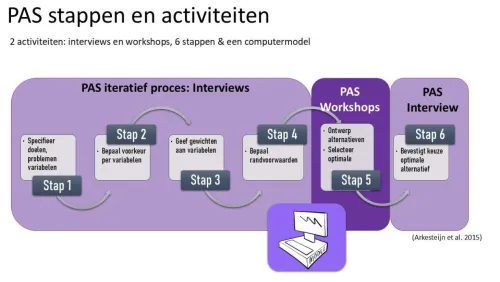
All stakeholders, from the executive board to the student council, are asked to define goals and variables and then assign value (preference) to each. This process takes six steps. Typically, stakeholders name fairly abstract goals, such as the accessibility of a facility. Rather than having a manager translate this, PAS asks stakeholders themselves to make it concrete. In one case, they translated “good accessibility” into desired walking distance in minutes, producing very specific preferences per stakeholder.

The outcome is one integrated preference score, while individual scores per criterion and per stakeholder remain visible and traceable.

Collaborative design

In the fifth step, stakeholders can design alternatives for the existing portfolio. During workshops, they work with a digital map on which they can click through various interventions. At each design step, it is visible how the preference score changes. Stakeholders can adjust or confirm their input throughout the process.

The design process is both a group process and a learning process. By designing together, stakeholders come to understand that their initial requirements do not always match what they actually mean. They begin to see that not everything is simply possible and that other interests also represent value. Priorities are set and tensions resolved along the way. The process stops when everyone agrees. The outcome is an optimal alternative to the current situation.

Tested in practice

PAS was tested in three pilot projects: two at TU Delft and one at ICT company Oracle. In the campus catering case, the added value of the preference-based strategy compared to the existing situation scored 54 on a scale of 100. Participants particularly appreciated the “learning by doing” aspect of the approach.

From real estate to new domains

PAS4ALL now takes this proven method beyond its original real estate context. The project tests whether PAS can support transparent, inclusive decision-making in areas such as energy and infrastructure. By working with interdisciplinary experts and aligning with the Design for Values framework, PAS4ALL aims to deliver practical tools for ethical decision-making in diverse domains, and ultimately develop an accessible user application, such as a web-based tool, that can be widely used by many parties.

Read more about the original PAS research at TU Delft

More info on PAS: https://www.tudelft.nl/bk/onderzoek/research-stories/de-gemeenschappelijke-voorkeur-als-vastgoedstrategie

Project Leads

Monique Arkesteijn

Monique Arkesteijn

Research Keywords:
Faculty:
Values:
Research Themes:
Application Areas:
Role:
Faculty:
Send Email
Visit Website
Hedieh Arfa

Hedieh Arfa

Research Keywords:
Faculty:
Values:
Research Themes:
Application Areas:
Role:
Faculty:
Send Email
Visit Website

Share This with:

Facebook X-twitter Linkedin Envelope

Related Seed Projects

SIG on Designing Technology for Mental Wellbeing Oct 24

SIG on Designing Technology for Mental Wellbeing

The SIG Ethics of and Design for Good Influence investigates how technologies and institutions shape human behavior, focusing on influence that supports rather than undermines autonomy.…

SIG: Ethics and Design of Good Influence Oct 24

SIG: Ethics and Design of Good Influence

A Special Interest Group focused on the ethics and design of good influence, exploring how design can positively influence behavior and society.

SIG Education Oct 24

SIG Education

Education SIG The Education SIG aims to bring together educators from across the TU Delft to strengthen the integration of values, such…

Design for Values Institute Logo

Integrating values like well-being, justice, and autonomy in all stages of technology development through research, education, and collaboration.

Explore

  • Values
  • Application Areas
  • Fundamental Themes
  • Resources

Research

  • Latest Research
  • Publications
  • Annual Themes
  • About Us

Contact

info@delftdesignforvalues.nl

Subscribe to our newsletter

Stay Updated →

© 2026 Delft Design for Values Institute. All rights reserved.

Privacy Policy • Terms of Use