When we launched the Special Interest Group (SIG) “Designing for Justice: A Pluralist Approach” in September 2025, our ambition was to create more than another academic discussion forum. We envisioned a community where researchers, educators, practitioners, students, and societal partners could come together to explore what justice means in design through dialogue across disciplines, cultures, and ways of knowing.
One year later, it is encouraging to look back and see how this community has started to take shape.
Our journey began with the kick-off meeting, where colleagues from across TU Delft and beyond reflected on how justice can be embedded in design, engineering, education, and innovation. During the meeting we invited participants to share their perspectives on justice and what are the implications for design practice. The discussion reinforced one of the central ideas of the SIG: that designing for justice requires engaging with multiple philosophical traditions and remaining attentive to the values and experiences that shape design decisions in different contexts. Rather than seeking consensus around a single definition, the discussion embraced plurality as a strength, identifying shared interests in areas including climate and energy transitions, AI, urban development, as well as the role of decolonial perspectives, participation, and inter- and transdisciplinary engagements.
Throughout the year, these conversations have evolved into a series of seminars, workshops, and collaborative eventsthat approached justice from different yet complementary perspectives.
Our first 2026 seminar, “A Pluralist Account of Justice,” set the intellectual tone for the year by bringing together students, practitioners, researchers, and members of the Delft Design for Values Institute for a lively cross-sector dialogue on justice in design. The seminar featured a joint presentation by Tristan de Wildt and Anna Melnyk, Exploring Biases in the Western Development Paradigm: Traces of Green Colonialism in Engineering and Policy Discourse. Using the case of the Aitik copper mine in northern Sweden, with the help of LLMs the project examined how Indigenous Sámi perspectives, policy and regulatory frameworks, and corporate narratives differently frame the extraction of critical raw materials. The discussion highlighted how dominant technocratic narratives of the green transition can reproduce colonial power relations, while Indigenous perspectives offer alternative moral frameworks grounded in relationality, reciprocity, and self-determination. The seminar sparked a rich discussion on the role of LLMs in research practice and the need to critically examine the values embedded within engineering and policy discourse, demonstrating how Design for Justice can create space for dialogue between different knowledge systems and challenge dominant assumptions about sustainability and innovation. The event also showcased how the SIG serves as a platform where ongoing research can foster broader interdisciplinary conversations around justice, technology, and societal transformation.
The Theatre of the Techno-Oppressed workshop, facilitated by Frederick van Amstel, brought a powerful experiential dimension to the SIG’s exploration of justice by demonstrating how participatory and embodied methods can deepen critical engagement with technology and society. Inspired by Augusto Boal’s Theatre of the Oppressed and informed by van Amstel’s work on Embodied Interaction Design, the workshop invited participants to move beyond conventional discussions of ethics by collectively enacting and reflecting on technology-mediated situations of oppression, exclusion, and resistance. Through improvisation, dramatic exercises, and collaborative reflection, participants examined how digital platforms, social media, and everyday technologies shape power relations, bodily experiences, and opportunities for agency, while also imagining alternative and more liberating technological futures. The workshop challenged participants to see themselves not merely as users of technology, but as active agents capable of questioning, appropriating, and redesigning socio-technical systems. In doing so, it illustrated how creative, embodied, and participatory approaches can complement traditional academic methods and enrich Design for Justice by making questions of power, oppression, and liberation tangible and collectively negotiable.
Beyond the events organised directly by the SIG, we were pleased to support several initiatives that closely aligned with our mission. Stewarding Change: Values, Resources, and Materials in the Energy Transition, a female-led event organized by Indigenous Liberation Month × Just Transitions Network (KIN), brought together Indigenous knowledge holders, engineers, researchers, policymakers, and practitioners to explore how cultural values can inform more just approaches to critical raw materials and energy transitions. By placing Indigenous perspectives in dialogue with engineering and policy discussions, the event highlighted the importance of recognising diverse knowledge systems in technological decision-making.
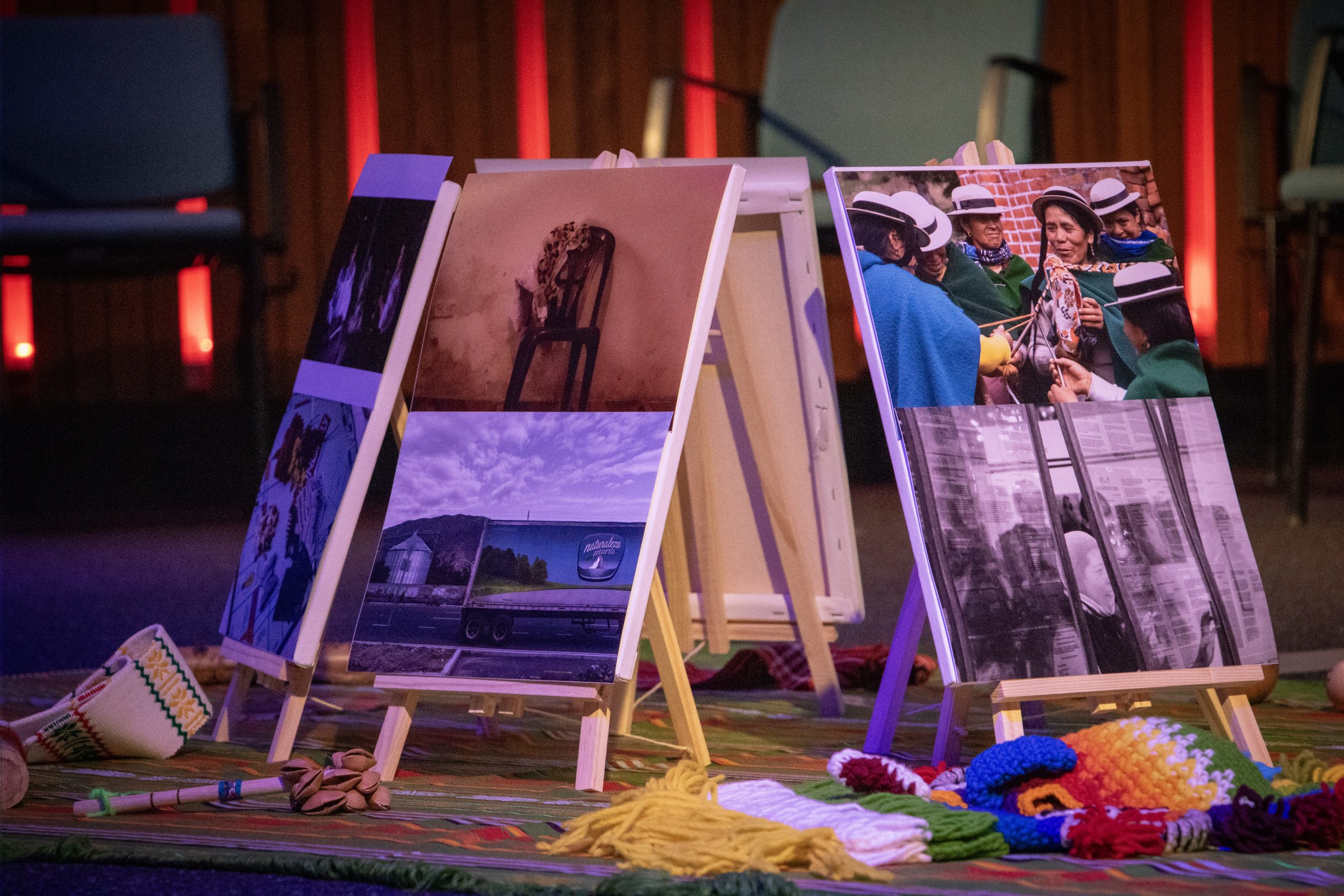
The SIG also supported the closing event of the Design for Values and Critical Raw Materials: Decolonial Justice Perspectives project. Bringing together researchers, artists, Indigenous collaborators, students, and practitioners, the event demonstrated how design can create spaces for dialogue across cultures and disciplines, while reminding us that justice is not only an outcome of design but also a way of collaborating, learning, and creating knowledge together.
Looking back, what stands out most is not the number of events we organised, but the bridges we built and the conversations that sparked. Across seminars, workshops, and collaborations, participants challenged dominant assumptions, experimented with new methods, reflected on emerging technologies and societal challenges, and explored how justice can become a lived practice rather than an abstract principle.
Perhaps most importantly, the first year reaffirmed one of the founding ideas of the SIG: that designing for justice requires plurality, not only in the theories we draw upon, but also in the voices we invite, the methods we employ, and the partnerships we cultivate. Some of the most inspiring moments emerged when engineering met philosophy, when researchers learned from artists and activists, and when local challenges connected to global questions.
Looking Ahead
As we move into the second year of the SIG, our ambition is not only to continue organising seminars and workshops, but also to deepen the intellectual community that has begun to emerge. We hope to create more opportunities for sustained transdisciplinary reflection on what Design for Justice means across different fields of inquiry and how pluralist approaches can contribute to addressing complex societal challenges.
Building on the momentum of our first year, we are exploring several new initiatives. These include paper presentations, panels at international conferences, thematic sessions that bring together researchers, policy makers, artists, and societal partners from different disciplines, and the development of joint publications. We are also excited about the possibility of an edited volume on Design for Justice that would bring together the diverse perspectives, methods, and case studies cultivated through the SIG, offering a lasting contribution to the growing international conversation on justice in design and technology.
Above all, we hope to continue building a community where curiosity, critical reflection, creativity, and openness to different ways of knowing remain central. The first year has shown that some of the most meaningful conversations emerge when disciplinary boundaries become meeting places rather than barriers. We look forward to continuing this journey together and to further shaping Design for Justice as both an intellectual endeavour and a collaborative practice at TU Delft and beyond.
Photo credits: Laure Herpain

 Jul 15
 Jul 15
 Jun 29