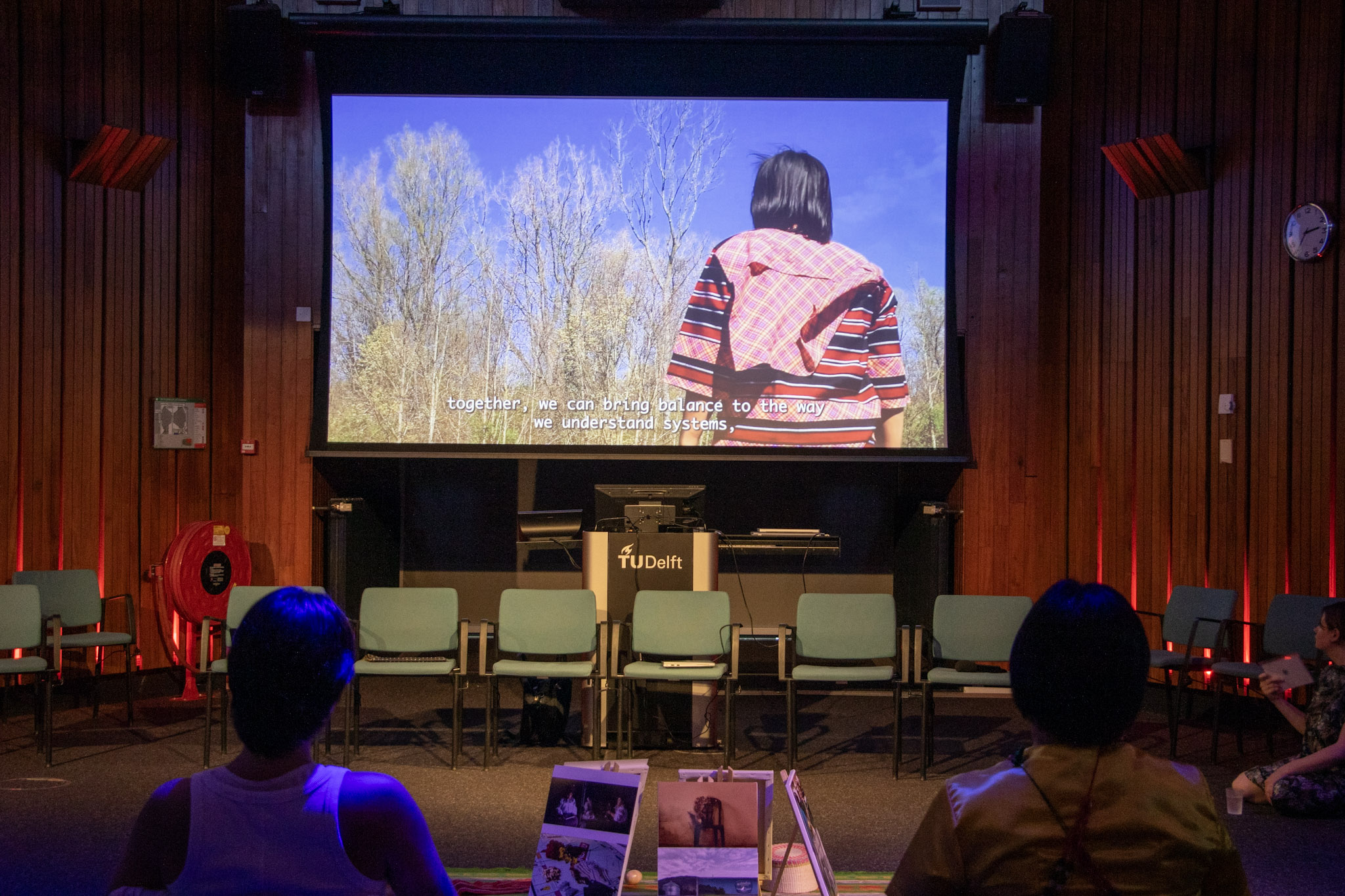
On 26 June 2026, researchers, practitioners, artists, students, and community partners gathered at TU Delft for the closing event of the Design for Values and Critical Raw Materials: Decolonial Justice Perspectives seed project. While the event marked the formal completion of the project, it also celebrated the beginning of new collaborations and conversations that will continue to shape research and practice within the Design for Values community and beyond.
The project set out to explore how Design for Values can respond to one of the defining ethical challenges of contemporary sustainability transitions: the rapidly growing demand for critical raw materials. While these materials are essential for renewable energy technologies, batteries, and digital infrastructures, their extraction often raises difficult questions concerning environmental degradation, extractivism, Indigenous rights, power relations, and reparational justice. Throughout the project, we asked how Design for Values can better account for these realities and how perspectives that have historically been marginalised can become an integral part of technology design rather than an afterthought.
Grounded in the Design for Values approach, the project brought together philosophy, engineering, design, social sciences, artistic practice, and Indigenous knowledge through a process of dialogue and co-creation. Rather than treating justice as a principle to be applied at the end of design processes, the project explored how plurality, relationality, and community perspectives can shape technological assessment, design, and governance from the outset.
The closing event reflected this collaborative spirit by bringing together an international network of researchers, Indigenous leaders, artists, designers, students, and practitioners. The discussions demonstrated that addressing the ethical dimensions of critical raw materials requires moving beyond disciplinary boundaries and recognising multiple ways of knowing and experiencing technological change. Several key outcomes of the project were presented during the event.
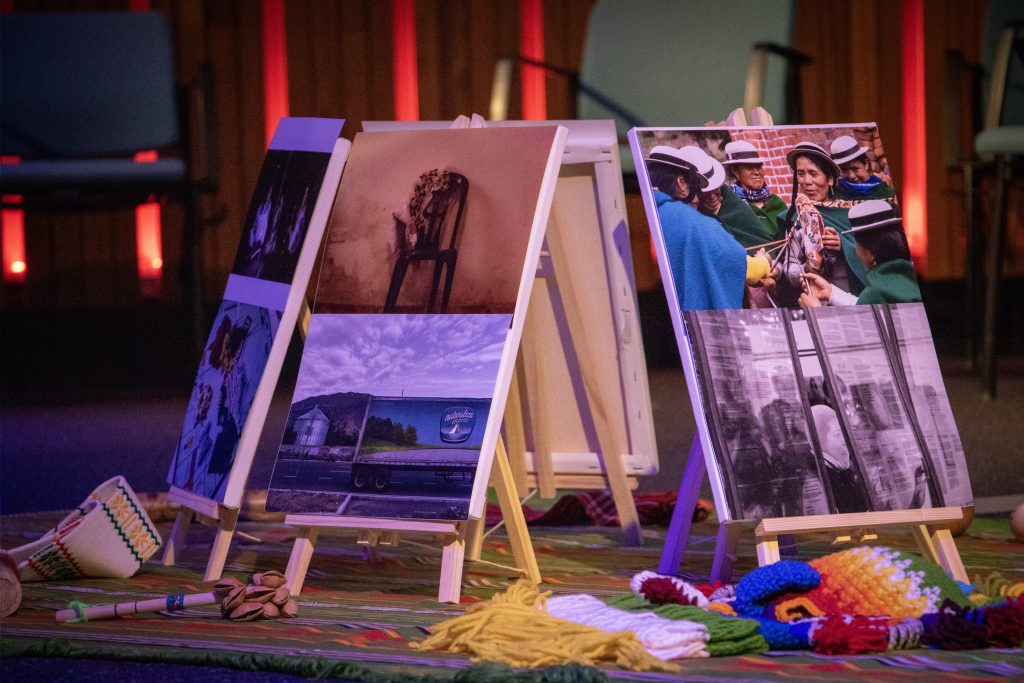
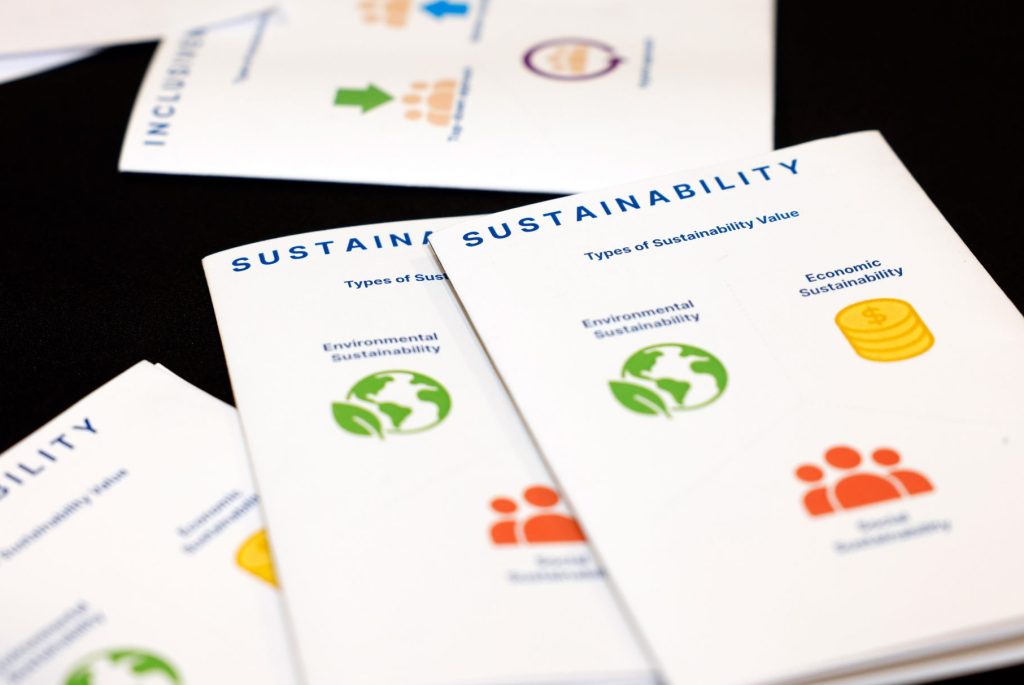
One of the highlights was the introduction of the Value Sensitive Design (VSD) Envisioning Cards: Global Reflections Extension Set. Conceived by Anna Melnyk and developed through an international collaboration with Ángela María Díaz-Márquez, the extension expands the VSD Envisioning Cards by introducing questions surrounding colonial histories, extractivism, global inequalities, Indigenous knowledge systems, recognition, human–nature relations, and plural understandings of justice. The powerful visual language developed by Colectivo Fotográfico SolipsisArt Ecuador transformed these philosophical reflections into an inspiring and engaging educational resource that can support teaching, design practice, and participatory workshops.
The event also featured the screening and discussion of Re-rooting: Indigenous Perspectives on Just Transitions, a documentary co-created by Myra Colis, Anna Melnyk, and Laure Herpain in close collaboration with the MABIKAs Foundation and Klimaatonderzoek Initiatief Nederland (KIN, NWO). Rather than merely communicating research findings, the documentary itself became a process of collaborative knowledge production, inviting audiences to reflect on Indigenous perspectives, climate transitions, justice, and intergenerational futures.
Participants were also introduced to findings from the project’s Aitik mine case study, which examined how the extraction of critical raw materials raises ethical questions that extend well beyond technological efficiency. The workshop also showcased a LLM-assisted analysis methodology to support climate justice advocacy by identifying, synthesizing, and critically reflecting on ethical perspectives across diverse stakeholder narratives. The case highlighted the importance of considering Indigenous rights, environmental stewardship, historical responsibility, recognition, and meaningful participation in the design of future energy systems.
Beyond presenting project outcomes, the closing event created space for dialogue with related initiatives that place communities at the centre of sustainability transitions. This included discussions around the forthcoming second edition of Circular Communities: Learning from Global Practices Using the Circular Value Flower, developed through the Circular Community Foundation. These exchanges highlighted the value of connecting Design for Values with broader international efforts to promote justice-oriented and community-centred approaches to sustainability.
Perhaps the strongest message emerging from the event was that this project represents the beginning of a longer journey. The documentary, the Global Reflections Extension Set, the case study, and the partnerships established throughout the project provide foundations for continued research, education, and public engagement on questions of decolonial justice within Design for Values.
This work would not have been possible without the commitment and generosity of many collaborators. We would like to express our sincere gratitude to Fátima Delgado Medina, Camilo Benitez Avila, Andrea R. Gammon, Tristan de Wildt, Ángela María Díaz-Márquez, Laure Herpain, Indushree Banerjee, MABIKAs Foundation, and Colectivo Fotográfico SolipsisArt Ecuador, whose expertise, creativity, and dedication greatly enriched the project. We are equally grateful to our institutional partners the Delft Design for Values Institute, Klimaatonderzoek Initiatief Nederland (KIN), and Universidad de Las Américas (Ecuador) for their invaluable support.
Finally, we would like to thank the Decolonial Working Group and Design for Justice Special Interest Group (SIG). The project has contributed to the development of these growing communities, and both groups now provide an important platform for continuing conversations on justice, plurality, decoloniality, and technological design within and beyond the Design for Values community.
We look forward to building on the relationships established through this project and to continuing this collective journey towards more just, inclusive, and globally informed approaches to designing socio-technical futures.
Photo credits: With gratitude to Laure Herpain for her beautiful photography featured throughout this publication.


 Jul 29
 Jul 15
 Jun 29