
Design for Decolonial Justice: Critical Reflection on Frugal Innovation in Engineering

A team of researchers from the TU Delft Faculty of Technology, Policy, and Management recently hosted a thought-provoking workshop on Decolonial Justice and Frugal Innovation as part of the LDE Minor: Frugal Innovation for Sustainable Global Development. This event, facilitated by Fátima Delgado and Anna Melnyk, was part of the Design for Values (DfV) seed-funding project “Design for Values and Critical Raw Materials: Decolonial Justice Perspective” and focused on addressing the ethical and social challenges of engineering practices in the context of the Global South.
The workshop delved into how industrial activities and resource extraction are historically tied to “colonial values” that perpetuate environmental degradation and social injustices. Participants explored the ways these values continue to shape engineering practices and were encouraged to critically reflect on their positionality, privilege, and responsibility when working in vulnerable or marginalized communities.
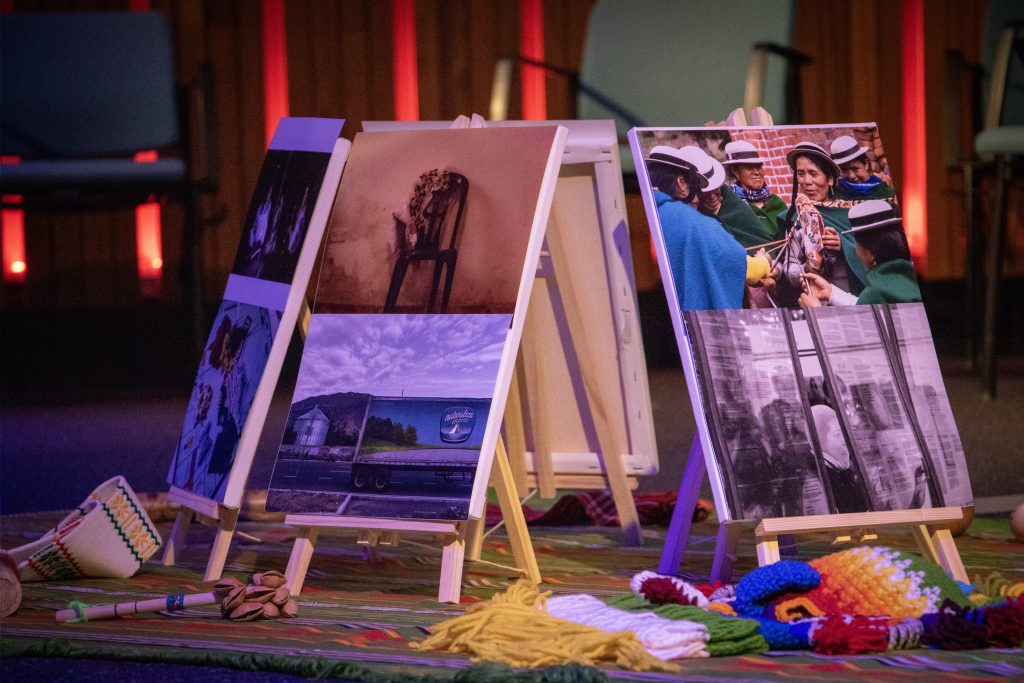
The event highlighted how integrating research on Design for Values and decolonial justice into engineering education can provide students with critical perspectives on recognizing colonial legacies in their work. It opened with a discussion on the importance of immersive learning experiences, using rituals and collective reflection to emphasize the need for designing technologies that respect diverse cultural practices and worldviews.
A highlight of the workshop was a gaming session and interactive discussions that encouraged students to examine technologies and value systems from different parts of the world. The session focused on recognizing multiple knowledge systems, cultural perspectives, and the implicit biases of engineers, fostering a more inclusive and ethically aware approach to design.
By critically analyzing power dynamics, students were challenged to rethink their roles as engineers. The workshop reinforced the importance of supporting Indigenous communities, addressing historical harms, and ensuring the ethical impacts of engineering work are considered on both local and global scales. Events like this aim to equip future engineers with the tools and perspectives needed to create sustainable, responsible, and inclusive technologies.
Related posts
 Jul 29
Looking Back on the First Year of the Special Interest Group Designing for Justice: A Pluralist Approach
When we launched the Special Interest Group (SIG) “Designing for Justice: A Pluralist Approach” in September 2025, our ambition was to create…
 Jul 15
“Re-rooting: Indigenous perspectives on just transitions” is now available online!
“Re-rooting: Indigenous perspectives on just transitions” is now available online! A co-created documentary and dialogue initiative on Indigenous principles for just climate…
 Jul 15
Reflections on the Closing Event: Design for Values and Critical Raw Materials – Decolonial Justice Perspectives
On 26 June 2026, researchers, practitioners, artists, students, and community partners gathered at TU Delft for the closing event of the Design…