
“Values Never Conflict, Only Practices Do” – So Design Solutions May Exist

“Values as such never conflict, only the practices in which they are embedded do.” This seemingly simple claim is what stuck with me most after the interesting and engaged discussion that we had at the DDFV Playground Meeting of 15 March. It is actually an important insight that is key to what the Delft Design for Values Institute does, as it offers opportunities to solve value conflicts not by prioritizing one value over others, but by re-designing our practices – which often also requires redesigning the technologies that shape and constitute them. DDFV scientific director Jeroen van den Hoven, for example, is known to argue that we should not carelessly sacrifice privacy to gain security, or the other way around, but that we should explore how we can re-design our ICT systems in such a way that both values get respected or promoted. Not surprisingly, ‘value conflicts’ is one of the cross-cutting research themes of the Delft Design for Values Institute.
W2R2bWVtYmVyIGlkPSIyMjU3IiBncmlkc3R5bGU9ImZ1bGwiIG9mZnNldD0iMjAiIGl0ZW13aWR0aD0iMjUwIiBzaWRlPSJyaWdodCIgcm91bmRlZD0iIl0=
Culture Sensitive Design
The examples that DDFV-researcher Annemiek van Boeijen gave in her presentation came not from the domain of ICT, but from industrial product design. She distinguished among others between value conflicts internal to the person, between an individual and the group, and between different groups. Her topic of specialization is culture sensitive design. She shared among others the cultural dimensions (sheet 11) that she uses when working with students, such as hierarchy (high/low), identification (individual/together), time (past/future oriented).
One topic of discussion was whether her student projects are predominantly normative (taking a clear position on the values that should prevail, trying to nudge or convince users) or ‘descriptive’ (taking existing values of users as a given, trying to accommodate them as best as possible). The most important for Annemiek, as I understood it, was making the students aware of their own value judgments, partly rooted in their cultural background, that they bring to the design table.
One of the challenges in design for values that we discussed, based on the examples that she gave, is how you know that your design is successful in respecting/promoting the relevant values or solving value conflicts. More work needs to be done on that – and it is certainly an important theme for the Delft Design for Values Institute.
Jmx0O2lmcmFtZSBzdHlsZT0mcXVvdDtib3JkZXI6IDFweCBzb2xpZCAjQ0NDOyBib3JkZXItd2lkdGg6IDFweDsgbWFyZ2luLWJvdHRvbTogNXB4OyBtYXgtd2lkdGg6IDEwMCU7JnF1b3Q7IHNyYz0mcXVvdDsvL3d3dy5zbGlkZXNoYXJlLm5ldC9zbGlkZXNob3cvZW1iZWRfY29kZS9rZXkvOFZNNEdMVHhlTnAzbUMmcXVvdDsgd2lkdGg9JnF1b3Q7NTk1JnF1b3Q7IGhlaWdodD0mcXVvdDs0ODUmcXVvdDsgZnJhbWVib3JkZXI9JnF1b3Q7MCZxdW90OyBtYXJnaW53aWR0aD0mcXVvdDswJnF1b3Q7IG1hcmdpbmhlaWdodD0mcXVvdDswJnF1b3Q7IHNjcm9sbGluZz0mcXVvdDtubyZxdW90OyBhbGxvd2Z1bGxzY3JlZW49JnF1b3Q7YWxsb3dmdWxsc2NyZWVuJnF1b3Q7Jmd0OyAmbHQ7L2lmcmFtZSZndDs=
Value Flexibility in Architecture
DDFV executive director Pieter Vermaas addressed yet another important theme for the Delft Design for Values Institute in his presentation, and that is societal value dynamics or the fact that people’s (interpretations of) values change over time. This raises a challenge for designing for values if the product of design is supposed to last a long time – as is the case in architecture.
Pieter introduced a case study of dealing with value dynamics, namely old apartment buildings in Lisbon that no longer fit contemporary ways of living. Software was developed that helps people to choose a renovation plan that best fits their lifestyle. The idea is that based on certain input metrics, such as family size, they get a number of good options. One question that was discussed is whether this program addresses the values or merely the preferences of the inhabitants, and if and how can we distinguish between those.
Another issue that came up, is that this is not just about the values of the inhabitants. The question is also which values become embedded in the floor plans included in the software and the recommendations it makes. In the presentation of Van Boeijen it was for example mentioned that Chinese students are used to sharing rooms and actually tend to value having each others company. If this software presents floor plans with at least three bed rooms to families with two children, would this not be a value-laden, culturally biased recommendation?
Jmx0O2lmcmFtZSBzcmM9JnF1b3Q7Ly93d3cuc2xpZGVzaGFyZS5uZXQvc2xpZGVzaG93L2VtYmVkX2NvZGUva2V5L3FDQWVpR0U5d0pjUnFzJnF1b3Q7IHdpZHRoPSZxdW90OzU5NSZxdW90OyBoZWlnaHQ9JnF1b3Q7NDg1JnF1b3Q7IGZyYW1lYm9yZGVyPSZxdW90OzAmcXVvdDsgbWFyZ2lud2lkdGg9JnF1b3Q7MCZxdW90OyBtYXJnaW5oZWlnaHQ9JnF1b3Q7MCZxdW90OyBzY3JvbGxpbmc9JnF1b3Q7bm8mcXVvdDsgc3R5bGU9JnF1b3Q7Ym9yZGVyOjFweCBzb2xpZCAjQ0NDOyBib3JkZXItd2lkdGg6MXB4OyBtYXJnaW4tYm90dG9tOjVweDsgbWF4LXdpZHRoOiAxMDAlOyZxdW90OyBhbGxvd2Z1bGxzY3JlZW4mZ3Q7ICZsdDsvaWZyYW1lJmd0Ow==
Some Resources
For those interested in Van Boeijen’s work on culture sensitive design:
- She has developed a card set to help designers towards a culture-conscious approach to design
- There is also an online course on culture sensitive design that she has developed for TU Delft (see the introduction video)
Related posts
 Apr 20
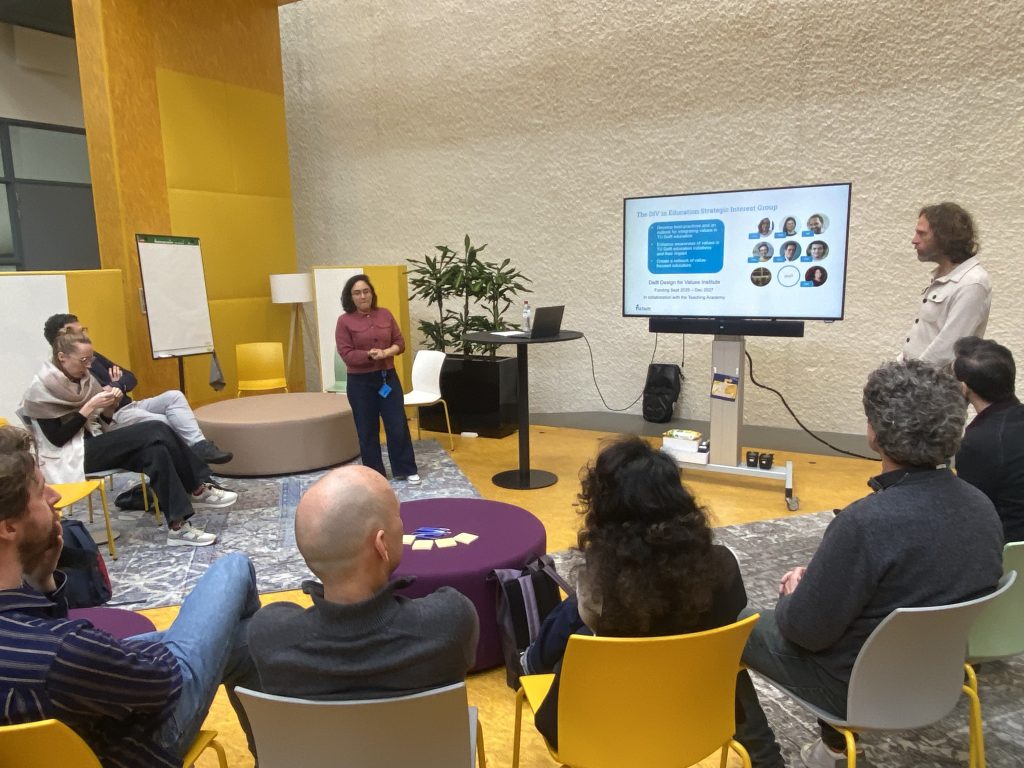
Design for Values in Education at TU Delft
The Education SIG aims to bring together educators from across the TU Delft to strengthen the integration of values, such as sustainability,…
 Apr 8
Apr 8
SIG Talks: Digital Technologies for Mental Well-being
As part of the Special Interest Group (SIG) on Digital Technologies for Mental Well-being, we highlight recent research exploring how ethical design…
 Feb 9
Feb 9
First 2026 Seminar of the Special Interest Group Design for Justice: A Pluralist Account
The Delft Design for Values Institute kicked off 2026 with the first seminar of its Special Interest Group Design for Justice: A…