Despite being surrounded by water, the Southwestern Delta of the Netherlands has a freshwater supply problem. Encircled by saline surface and groundwater, with no freshwater lake or river of its own, means that this delta area is particularly vulnerable. Climate change exacerbates the situation due to salinisation of existing water sources, rising sea level, and more frequent and extreme summer droughts.
At the same time, the area has many large water users in the form of agriculture who have seasonal peaks of freshwater demand and industry which requires vast volumes of fresh water all year round. Additional uses such as drinking water supply, maintaining nature and ecosystems and then the need for recreation, tourism and shipping routes, leads to a mismatch of freshwater supply and demand. In spite of the fact that this area of the Netherlands actually experiences very wet periods at times of the year, drainage to the sea of the rainwater that falls means that it cannot contribute to reducing the drought at other times. Adapted water management, in the form of storage and reuse of existing water streams, is therefore needed.
A regional water bank as a governance solution
The NWO KIC project “Storage, Upgrade, Reuse and Distribution of Water in regional collaborative networks” (STURDI-Water) aims to design a regional water bank as a governance solution to the freshwater supply and demand problem. The water bank is envisioned as a collaborative legal entity arranging a sufficient amount of water of the required quality for a user when needed, in a fair way and for an affordable price.
To achieve this, many parties must work together to overcome both technical (e.g. treatment efficiency, removal of persistent pollutants) and non-technical (e.g. limiting legislation, economic incentives) barriers. The STURDI-Water consortium therefore consists of relevant stakeholders in the water system: government, industry, agriculture, nature conservation, citizens, drinking water providers, water technology developers and researchers.
Identifying the values at stake
When matching supply and demand of fresh water, a water bank may be faced with decisions which could include conflicting values, for example, food production versus human health when using recycled municipal effluent water for agricultural irrigation. For this reason, our study combined the procedural aspects of Responsible Innovation and the substantive features of Value Sensitive Design, in an attempt to identify the relevant values at stake and eventually make the design of a water bank value-sensitive.
Validating values with stakeholders
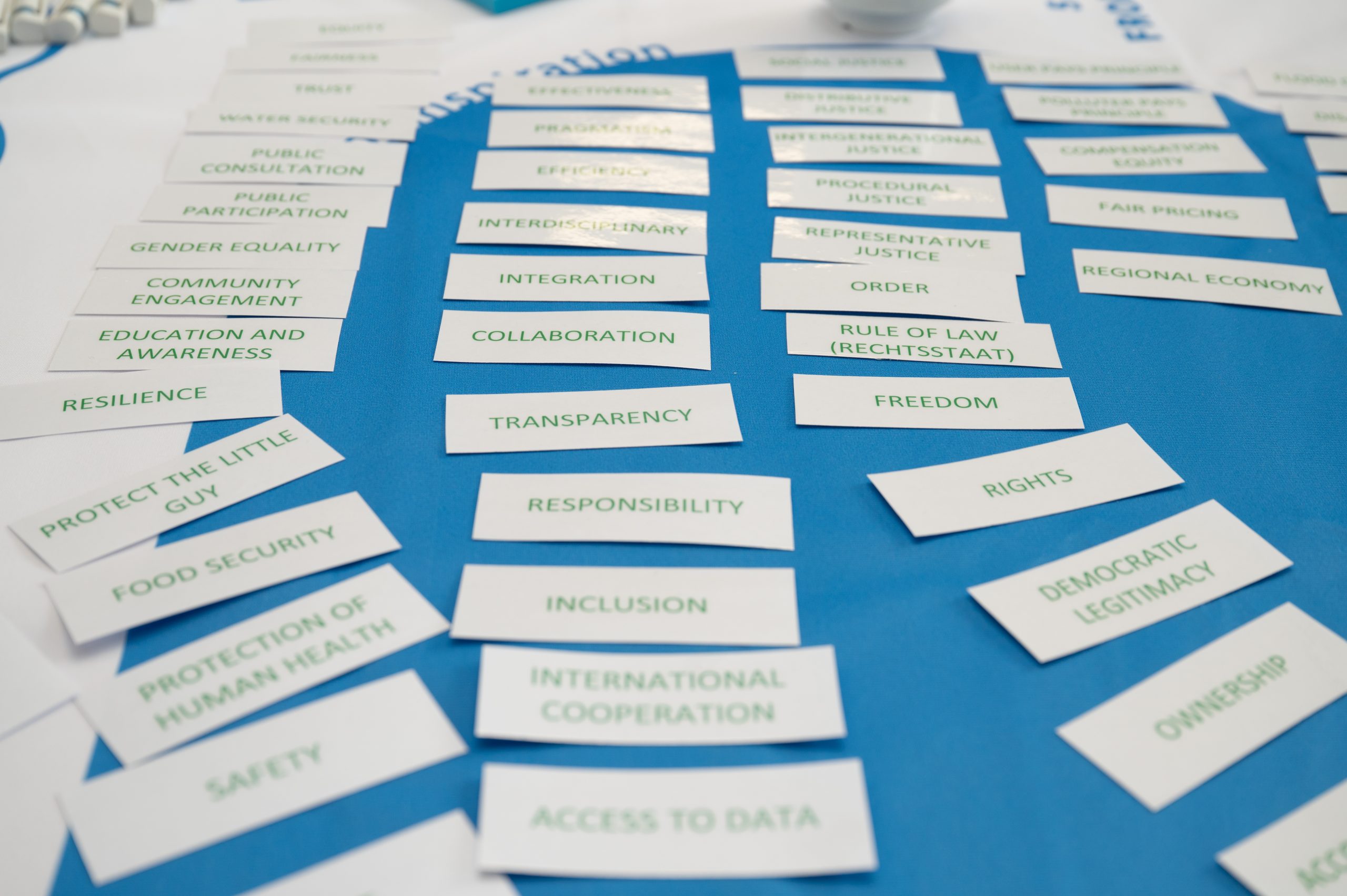
During the study, two separate values inventories were made, based on a systematic literature review: the values of water and the values of water banking. These inventories were then validated by stakeholders from the STURDI-Water consortium during a workshop.
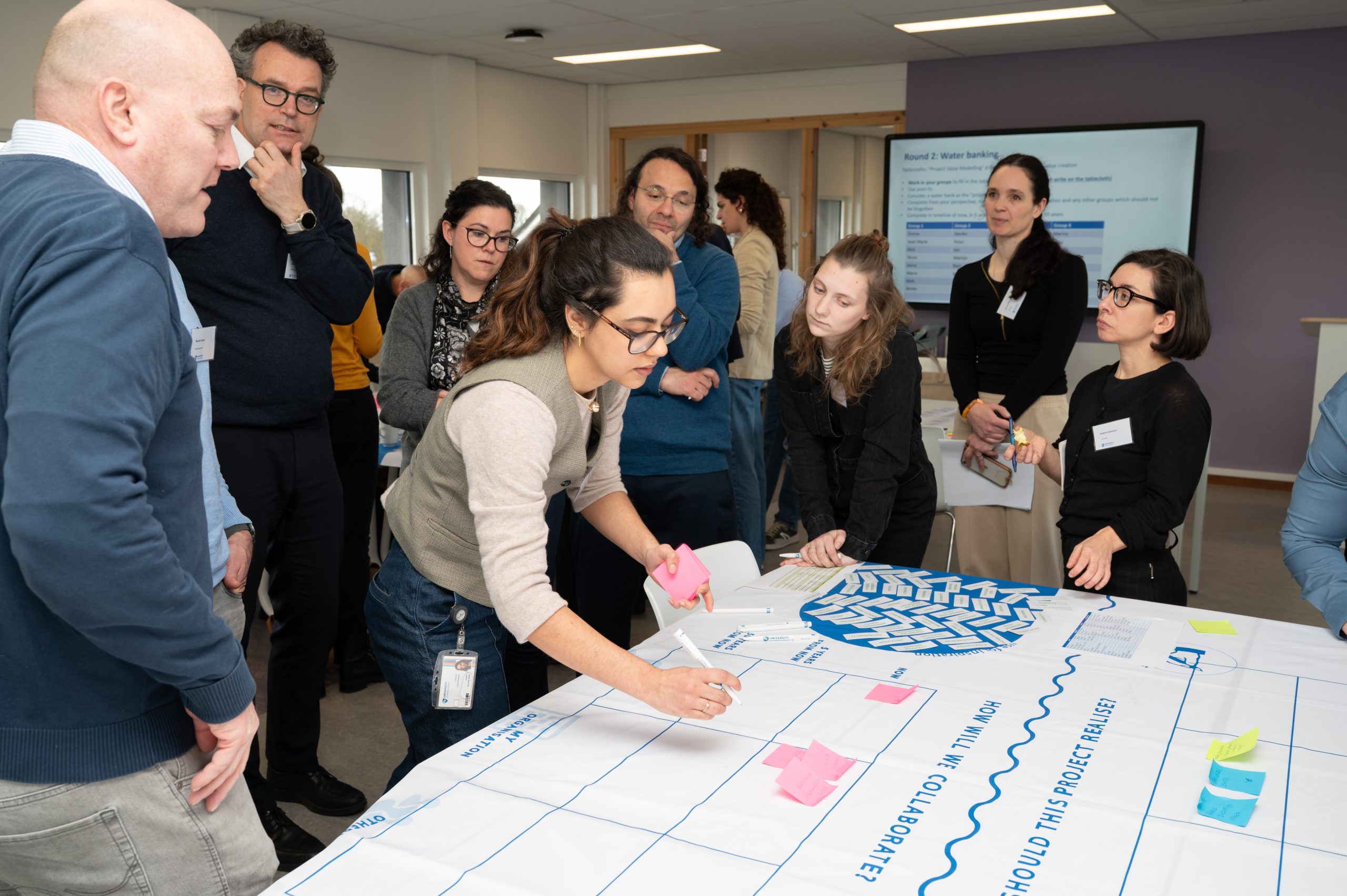
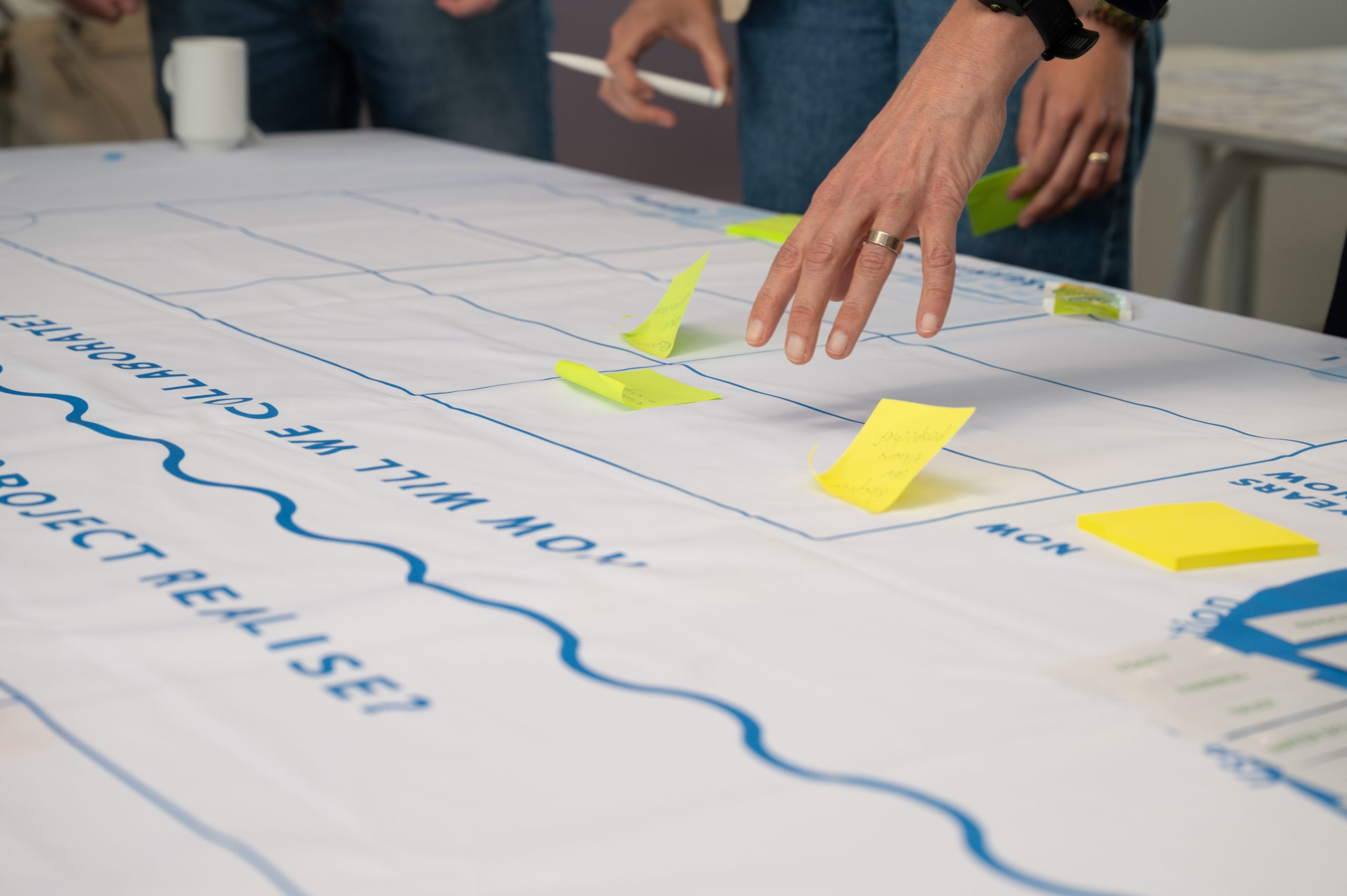
The workshop was structured around the use of the Project Value Modeling tool, designed by Marina Bos-de Vos, Sterre de Jager, and Ingrid Mulder. As this tool uses accessible values language for stakeholders from all backgrounds, it was possible to design a vision of what the water bank should realise and how stakeholders within the water bank should collaborate. The created values inventories were incorporated into the Project Value Modeling tool and used to guide the group discussions. The inventories were eventually validated by stakeholders and missing or irrelevant values were noted. The 126 values identified in literature were also narrowed down to 16 core values for water banking.
Next steps
This work was the first step in designing a value-sensitive water bank. It enabled the selection of core water banking values which form the basis of the next phases of the research: conceptualisation and specification.
We are happy to announce that this work was published in a Special Issue of Ambio Journal entitled: Public Design for the Water Transition and for those interested, can be found here.
We are also very open to hear your thoughts and ideas for the next phases of our work!
Authors
Emma McAteer (PhD candidate at the Delft University of Technology and Coordinator of Water Technology Research at HZ University of Applied Sciences), Hans Cappon (Professor of Water Technology Research at HZ University of Applied Sciences), Neelke Doorn (Professor of Water Engineering at the Delft University of Technology) and Andrea Gammon (Assistant professor of Ethics and Philosophy of Technology at the Delft University of Technology)

 Sep 9
Sep 9
 Aug 18
 Jul 2
Jul 2